You are not behind.
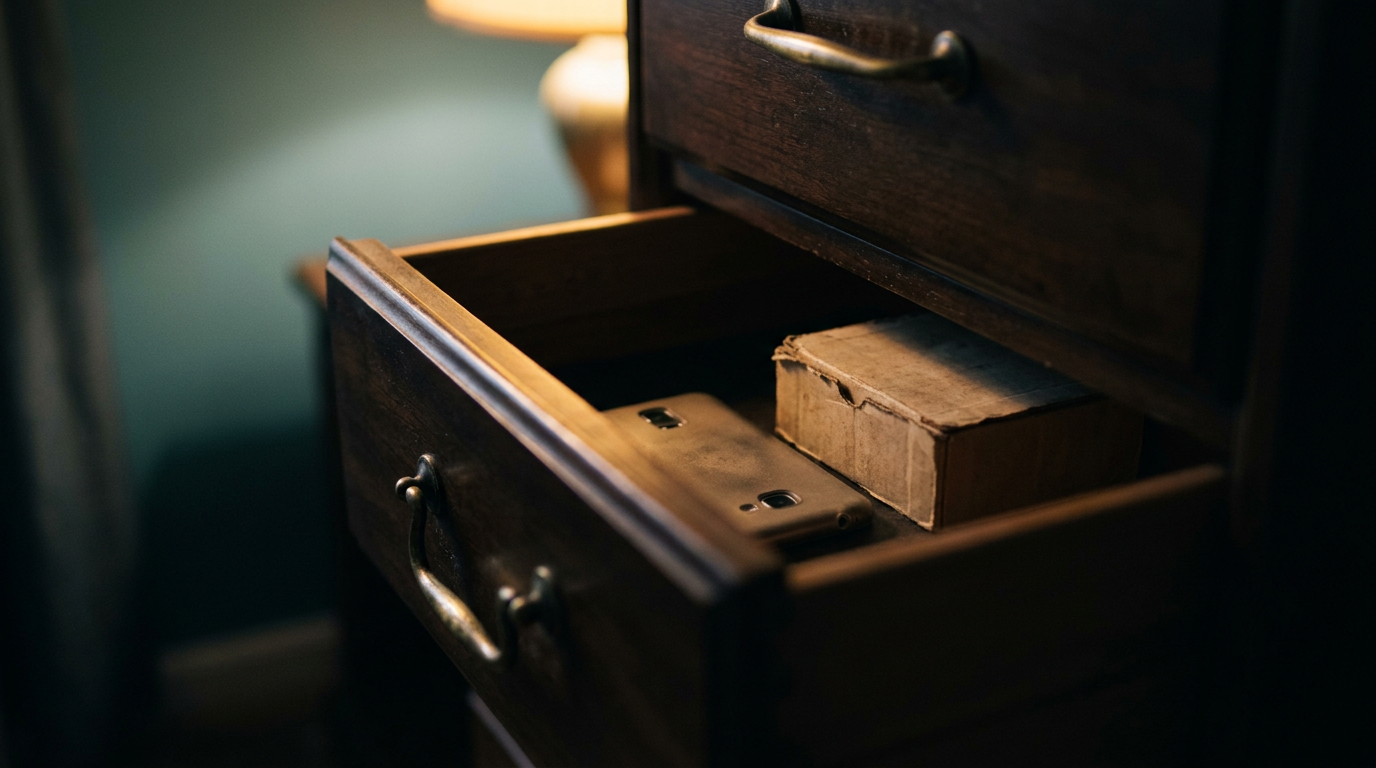
There is probably a phone in your purse, or a drawer in your house, or a box in the closet, that you have been avoiding. You know what is in there. Voicemails you cannot bring yourself to delete. Videos where you can hear them laughing in the background. A birthday, a holiday, an ordinary Tuesday that someone happened to record. And every time you think about doing something with all of it, about preserving it properly, your chest gets tight, because you do not know where to begin. So you close the drawer. You put the phone down. And you tell yourself you will get to it soon.
Putting it off may be your heart protecting you
I want you to know something first. That feeling is not laziness, and it is not failure. For many people, it is grief doing what grief does. When you have loved someone through long caregiving years and then lost them, your heart learns to protect itself. Putting it off can be your heart saying, this matters so much that I am afraid to touch it wrong.
I spent seventeen years as a caregiver, and I have grieved, so I do not say this lightly. If you have been carrying a quiet guilt about the box, or the phone, or the drawer, you can set it down right now. You are not behind. You are right on time for your own life.
The hard part is the first step
Here is what nobody tells you about preserving a person's voice and story. The hard part is not the technology. It is not the files or the formats or the cloud. The hard part is the first step. Starting can mean opening the drawer. It can mean hearing their voice on purpose, for the first time in a long time, and letting yourself feel whatever comes. That is why the first step can feel enormous. It is not a small administrative task. It is an act of love, and acts of love take courage.
You get to decide what your first step is. You do not have to press play today. Sometimes the first step is only knowing where the recordings are, or opening the drawer and closing it again. Go at the pace your heart can hold.
Why planning can feel safer than starting
Because the first step feels enormous, many of us try to skip it by planning instead. We research. We read articles about digital archiving. We buy an external hard drive that sits in its packaging for eight months. We tell ourselves we need the perfect plan before we begin, because a perfect plan would protect us from doing it wrong.
But there is no perfect plan. There is only a first step, taken gently, and then another one. What carries a family from overwhelmed to preserved is not a better plan. It is a beginning.
What is at stake while we wait
There may be a recording of the person you loved, saying something ordinary, in your home right now. A voicemail that says, call me back when you get this. Ten seconds of laughter at the end of a video nobody meant to keep. Those ordinary moments are the treasure.
And recordings like these can sit on devices that are aging, in accounts that could be closed, on a phone that could be dropped in a parking lot tomorrow. I call this the second loss. The first loss is when they leave. The second loss is when the recordings fade or disappear, and one day you press play and hear silence where their voice used to be.
You cannot undo the first loss. But you can protect against the second, while the recordings still exist. That is the whole reason this work exists.
Your first step for today
So here is one step for today. Not the whole journey. Just the first step. Answer the fifteen questions in the free Legacy Path Assessment, about where you are in your own story. You can do it from your couch, with your coffee, in your own time. There is nothing to download and nothing you need to prepare.
The assessment asks for your name and email, because after you confirm your email address, it sends your personalized Roadmap there. The Roadmap reflects the season you are in, what feels hardest to carry, and the pace that feels right, and it points to a fitting place to start. The vague, overwhelming everything can become something more specific: where you stand, and a first step that is yours. When everything feels like too much, a little clarity can be a real comfort.
If you start the questions and need to stop, that is fine too. Come back tonight, or next week, whenever your heart has room. No one is watching the clock.
Take the free Legacy Path Assessment whenever you are ready.
Where the Roadmap may lead, and other doors
Depending on your answers, your Roadmap may point you toward my books. The Empowered Caregiver is written for the person still in the middle of caring for someone they love. After the Goodbye is for the season after a loss.
If you are ready to protect their voice, voice preservation begins with digital voice files you have already saved and can access, such as voicemails, voice memos, or videos with their voice in them. Every word stays their own, from their real recordings. Nothing is ever recreated or invented.
The Legacy Continuance Archive is a separate path: a fine-art photography commission, by application, built around one original museum-grade photograph of a place, moment, or detail your loved one made sacred. It is a different work from voice preservation, and it does not include it.
None of this has to happen today. The first step is yours, and you can take it gently.
You do not have to carry this alone, and you matter in this story too.
Move with, not move on.
Andrea B. Denney